Structural Drying & Dehumidification in Jamaica, NY
Surfaces dry in a day. Framing, subfloor, plaster and concrete do not. Structural drying is the part of the job that decides whether the damage stays fixed.
(888) 527-9860Get the drying started today in Jamaica- IICRC S500 drying standard
- LGR and desiccant dehumidifiers
- Daily psychrometric logs
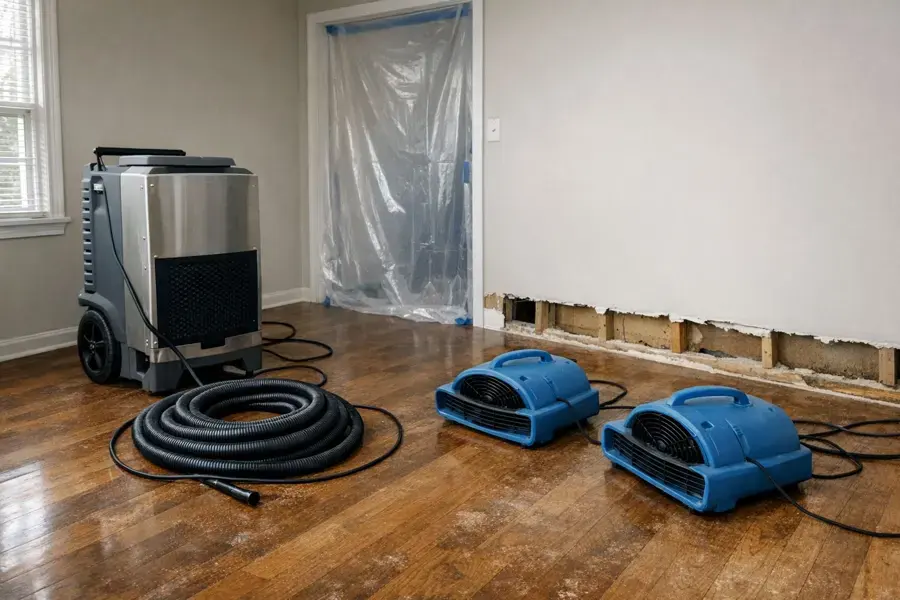
What to do the moment you find wet framing and floors
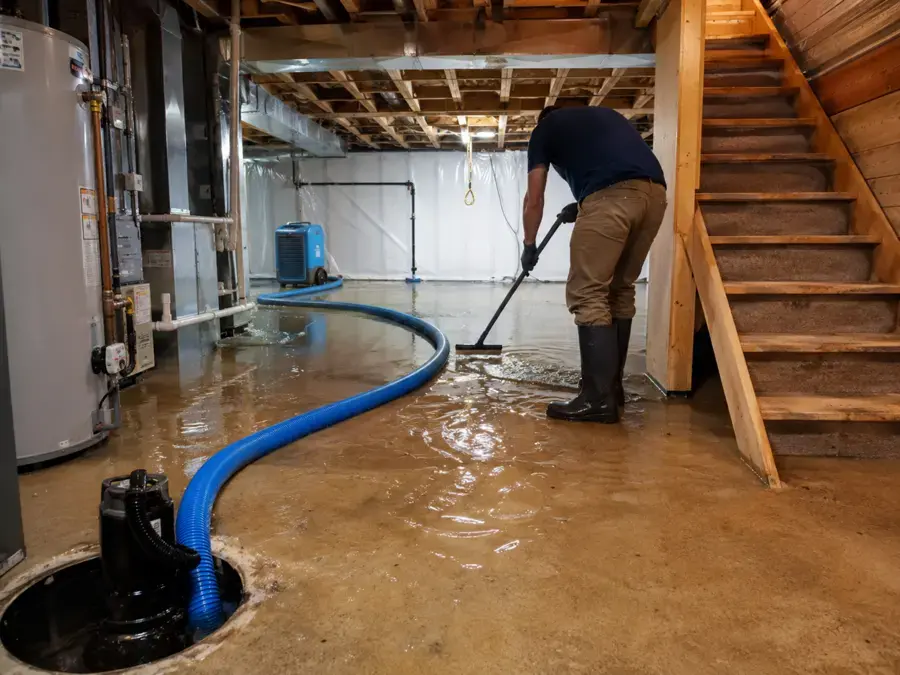
- 1Remove standing water first
Drying equipment cannot keep up with water that is still on the floor.
- 2Close up the room
Keep windows closed in humid weather so the dehumidifiers work on the room, not the outdoors.
- 3Leave equipment running
Turning air movers off at night slows drying and can extend the job.
- 4Do not rush the rebuild
Drywall and flooring go back only after the readings say dry.
How the crew handles wet framing and floors
- ASet a dry reference
The drying team reads an unaffected wall or floor in the same house as the target.
- BSize the equipment
Class 1 through 4 sets how many air movers and dehumidifiers a room needs.
- CRecord daily
Temperature, humidity and material readings are logged each day.
- DPull on readings
Equipment leaves when wet materials are within 2 to 4 points of the reference.
IICRC S500 is the industry drying standard, and it treats drying as a measured process rather than a guess. The difference between structural drying and surface drying is simple: a floor can feel dry to the touch while the subfloor, framing and wall cavity underneath still hold enough water to warp, stain and smell. Structural drying keeps going until the readings say dry, not until it looks dry.
What does structural drying & dehumidification cost in Jamaica, NY?
In Jamaica, NY, structural drying typically runs $1,200 to $6,000, depending on the class of the loss, the number of air movers and dehumidifiers needed, the number of drying days and whether dense materials like plaster, hardwood or concrete are involved.
Class 1 to 2, one area
$1,200 to $2,500
- Air movers and LGR
- Three to four days
- Daily logs
Multi-room or Class 3
$2,500 to $4,500
- More equipment
- Cavity drying
- Four to six days
Class 4 dense materials
$4,500 to $6,000+
- Desiccants or heat
- Hardwood mats
- Longer run
Drivers: the water category, the square footage, the material class and how fast drying started. For a planning range, try the water damage cost calculator.
How wet framing and floors is handled in Jamaica
- 1
Moisture mapping
The tech who does the walkthrough maps wet materials with thermal imaging and pinless meters first.
- 2
Extraction
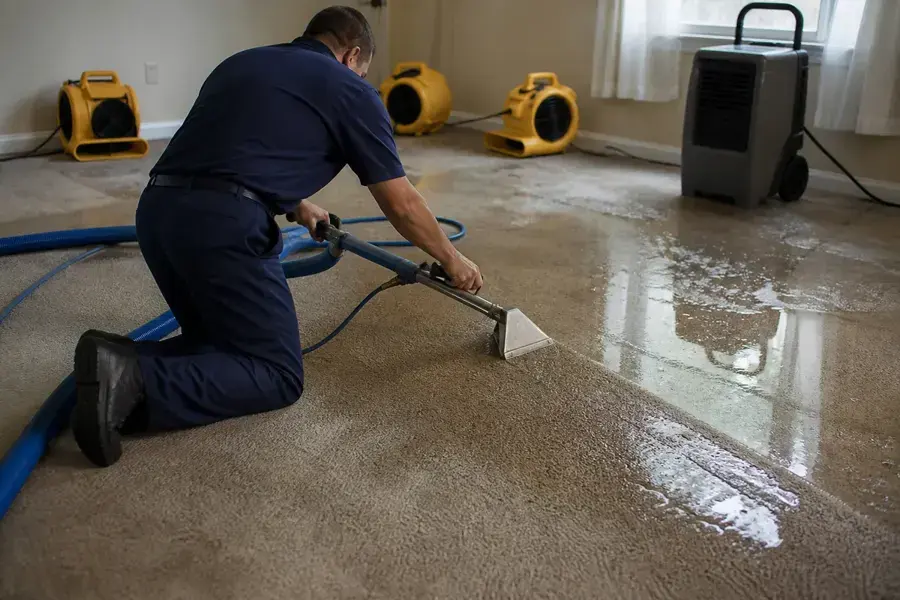
The extraction crew pulls standing water out with truck-mounted extraction, so it leaves the building.
- 3
Air movers and LGR
Air movers are set to each room's evaporation load; LGR dehumidifiers pull the moisture from the air.
- 4
Dry verification
Crews log readings daily and pull equipment once wet material is within 2 to 4 points of a dry reference.
Classes of water loss
Class 1 through 4 sets how much equipment a room needs. Class 1 is a small area with little absorbed water. Class 2 means carpet, pad and the lower part of walls are wet. Class 3 is the most water, often from overhead, soaking ceilings, walls and floors. Class 4 covers dense materials like hardwood, plaster, brick and concrete that hold water deep inside, which is common in the older houses and basements of Jamaica.
- Air movers are set to the evaporation load of each room
- LGR (low grain refrigerant) dehumidifiers pull that moisture out of the air
- Desiccant dehumidifiers handle cold spaces and Class 4 materials
- Floor drying mats pull water up out of hardwood
How the drying goal is measured
Moisture mapping comes before any equipment goes down. The drying team takes a reading from a dry, unaffected material of the same type in the same building, then tracks the wet materials daily. The goal is wet material within 2 to 4 points of that dry reference. The daily psychrometric logs, which record temperature, humidity and grains of moisture, go into the claim file with the photos.
Drying a basement that sits on seeping groundwater takes longer and needs the source managed too. Drying after a sewer backup starts only after contaminated materials are removed.
Indoor air while drying
Damp materials affect the air in the whole house. The EPA indoor air quality guidance explains why controlling moisture is the key to preventing indoor air problems after a leak.
Covering Jamaica and the neighborhoods around it
The Jamaica water damage pros take calls from Jamaica Center, Jamaica Estates, Jamaica Hills, South Jamaica, Rochdale Village, St. Albans, Addisleigh Park, Hollis, Briarwood, Kew Gardens, Richmond Hill, South Ozone Park and Springfield Gardens, plus the JFK Airport side of Southeast Queens.
The restoration team asks for the cross street and which floor is wet, because that decides what goes on the truck.
See every neighborhood and ZIP codeRelated water damage services in Jamaica
Structural drying questions, Jamaica, NY
What is the IICRC S500?
It is the industry standard for professional water damage restoration. It covers how losses are inspected, classified, extracted, dried and documented, including drying to a measured goal.
How do crews know when a house is dry?
They compare daily readings of wet materials with a dry reference material of the same type in the same building. Equipment comes out when the wet materials are within 2 to 4 points of that reference.
Why not just open the windows and use fans?
Fans move moisture off surfaces into the air, but without dehumidification the air stays wet, especially in humid Queens summers. LGR dehumidifiers remove that moisture so drying keeps going.
How long does structural drying take?
A contained Class 1 or 2 loss usually dries in three to five days. Hardwood, plaster and concrete take longer, and the equipment stays until the readings say dry.
Can hardwood floors be dried in place?
Often, with floor drying mats and dehumidifiers, if drying starts before the boards are badly cupped or separated. Readings show whether the boards are reaching the goal.
Why does the equipment have to run all night?
Drying is continuous. Turning equipment off lets humidity build back up and slows the whole job.
Wet framing or floors in Jamaica? Call now.
Structural drying to the IICRC S500 goal, logged daily for the claim file.