Basement Flooding Cleanup in Jamaica, NY
In a lot of Jamaica houses the basement is a bedroom, a den or a rented unit. When it floods, the local restoration pros pump it out, open what has to be opened and dry the rest to a verified reading.
(888) 527-9860Water in the basement? Call the Jamaica restoration team- Submersible pumps
- Flood cuts where needed
- Daily moisture readings
What to do the moment you find a flooded basement
- 1Stay off the stairs if water is deep
Do not walk into a basement where water covers outlets or the boiler controls.
- 2Kill power if the panel is dry
Many Jamaica panels sit in the basement. If reaching it means standing in water, leave it.
- 3Find the source
Floor drain, wall seepage, a burst line or the water heater: each one changes the plan.
- 4Photograph everything
Wide shots of each wall and close-ups of contents, before anything is moved.
How the crew handles a flooded basement
- APump the deep water
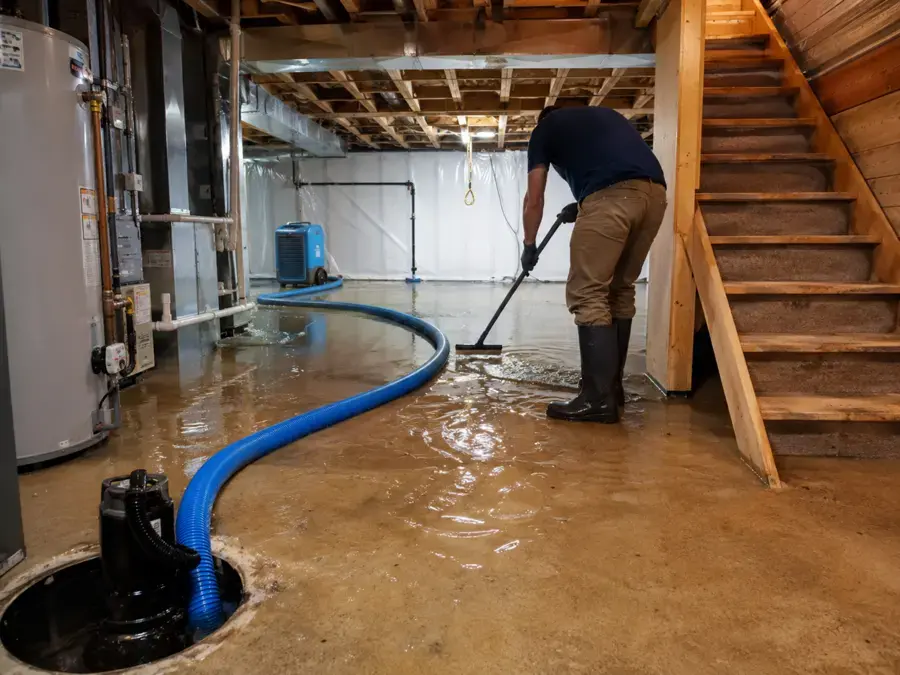
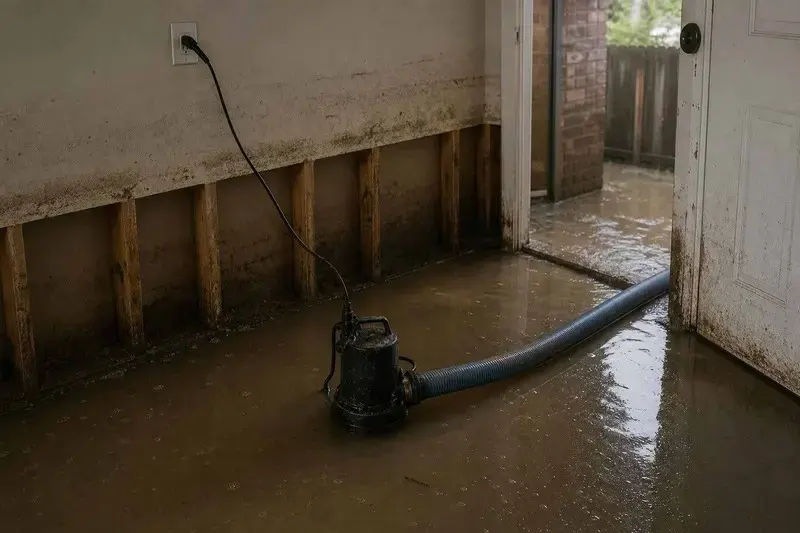
The response team drops submersible pumps where water is deepest.
- BSort by category
Clean pipe water and sewage from a floor drain are handled differently.
- COpen the walls
Flood cuts above the wet line let wall cavities and insulation dry or be removed.
- DDry and verify
LGR dehumidifiers run until readings match a dry reference in the house.
Basement flooding is the most common water loss in Jamaica and the neighborhoods around it. The houses in Jamaica Estates, St. Albans, Hollis and South Jamaica were mostly built between the 1910s and 1950s, and many of their basements have since been finished with drywall, carpet and laminate. That finish work is what turns a wet basement into an expensive one.
What does basement flooding cleanup cost in Jamaica, NY?
In Jamaica, NY, basement flooding cleanup typically runs $1,500 to $9,000, depending on the water category, the square footage, how much finished wall and flooring got wet and how fast drying started.
Unfinished basement
$1,500 to $3,000
- Pump-out and extraction
- Concrete and block drying
- Antimicrobial where needed
Finished basement
$3,000 to $6,500
- Flood cuts and insulation
- Carpet or laminate removal
- Structural drying
Sewage or deep flood
$6,500 to $9,000+
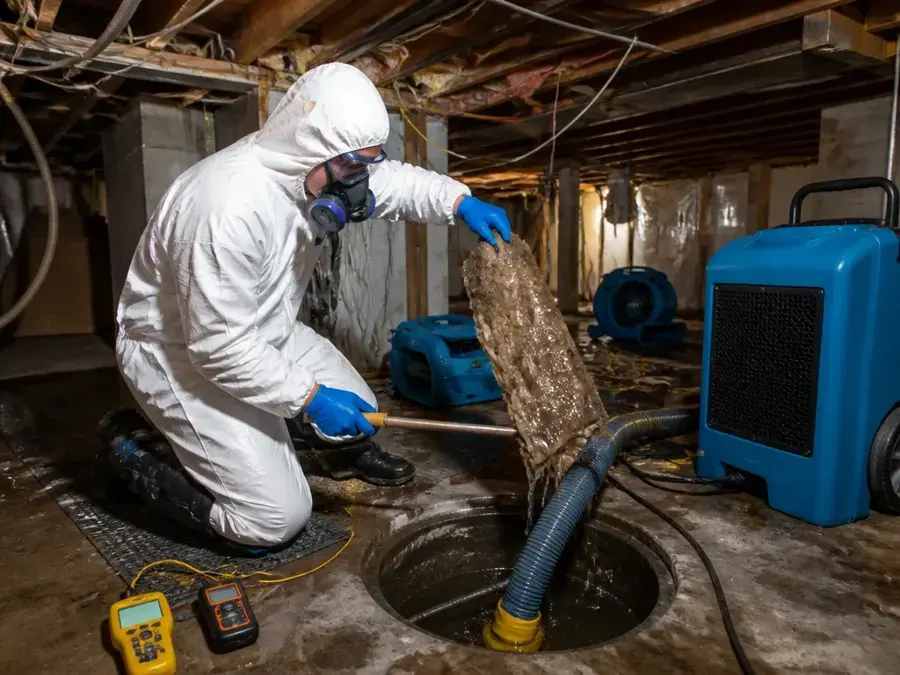
- Category 3 protocol
- Full porous removal
- Containment and HEPA
Drivers: the water category, the square footage, the material class and how fast drying started. For a planning range, try the water damage cost calculator.
How a flooded basement is handled in Jamaica
- 1
Moisture mapping
The tech who does the walkthrough maps wet materials with thermal imaging and pinless meters first.
- 2
Extraction
The extraction crew pulls standing water out with truck-mounted extraction, so it leaves the building.
- 3
Air movers and LGR
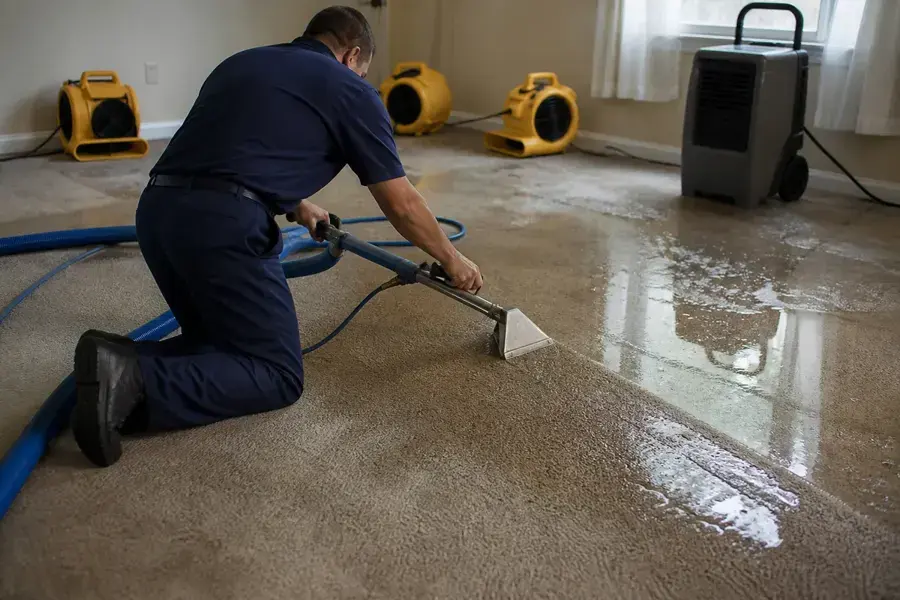
Air movers are set to each room's evaporation load; LGR dehumidifiers pull the moisture from the air.
- 4
Dry verification
Crews log readings daily and pull equipment once wet material is within 2 to 4 points of a dry reference.
Where basement water comes from in Southeast Queens
- Cloudbursts that overload the sewers and push water up through floor drains
- Groundwater seepage through the slab and walls where the water table sits high
- A failed water heater or a split supply line
- Storm water running down an exterior basement stair or through a window well
The source matters because it sets the water category. Water from a supply pipe is Category 1. Water that came up a floor drain is Category 3 the moment it happens, and the sewer backup protocol applies.
Finished basements and rented units
Drywall wicks water upward, and the insulation behind it holds water against the framing. The mitigation team usually makes flood cuts a foot or two above the highest wet reading so the cavity can dry, then removes wet insulation. In a rented basement unit, the file also has to show the tenant's contents and the timeline, which is why photos come before demolition.
Basement apartments flooded fast during the remnants of Hurricane Ida in 2021. If water is rising in a below-grade unit, get people upstairs first and call after.
Keeping the next one smaller
A backwater valve on the sewer line, a working sump with a battery backup and clear gutters and window wells all reduce the odds of a repeat. The NYC Department of Environmental Protection publishes guidance for Queens homeowners on sewer backups, and the National Weather Service flood safety page explains flash flood warnings.
Covering Jamaica and the neighborhoods around it
The Jamaica water damage pros take calls from Jamaica Center, Jamaica Estates, Jamaica Hills, South Jamaica, Rochdale Village, St. Albans, Addisleigh Park, Hollis, Briarwood, Kew Gardens, Richmond Hill, South Ozone Park and Springfield Gardens, plus the JFK Airport side of Southeast Queens.
The restoration team asks for the cross street and which floor is wet, because that decides what goes on the truck.
See every neighborhood and ZIP codeRelated water damage services in Jamaica
Basement flooding questions, Jamaica, NY
Can a finished basement be saved after a flood?
Often, yes, if the water was clean and drying starts quickly. The drying team usually removes the bottom of the drywall and wet insulation, then dries the framing and slab. Carpet pad and sewage-touched materials are removed.
How long does a flooded basement take to dry?
A contained Class 2 basement loss usually dries in three to five days. Block walls, plaster and multi-layer flooring take longer, and the equipment stays until the readings say dry.
Is basement flooding covered by insurance?
It depends on the source. A burst pipe or failed water heater is usually treated as sudden and accidental. Surface flood water and sewer backup often need separate coverage or an endorsement. Coverage depends on your policy, so it is worth checking with your own insurer.
Why does my basement smell even after the water is gone?
The smell usually comes from water trapped in drywall, insulation, carpet pad or the slab. Once wet porous materials are removed and the space is dried to readings, the odor goes with it.
What is a flood cut?
A flood cut is a straight cut along the wall above the highest wet reading. It opens the cavity so framing can dry and wet insulation can come out, and it gives a clean line for the rebuild.
Should a basement tenant stay in the unit during drying?
Usually not. Air movers and dehumidifiers are loud and run around the clock, and a Category 3 loss needs containment. Most landlords arrange other space until the unit is dry.
Basement underwater in Jamaica? Call now.
The response team brings pumps, extraction and drying equipment for below-grade losses.