Groundwater Seepage Cleanup in Jamaica, NY
Seepage is not a flood that comes and goes. It is water pushed up through the slab and walls by a high water table, and it keeps coming back until the drying and the source are both handled.
(888) 527-9860Water coming through the floor? Call the Jamaica restoration team- Hydrostatic seepage
- Slab and block drying
- Daily moisture readings
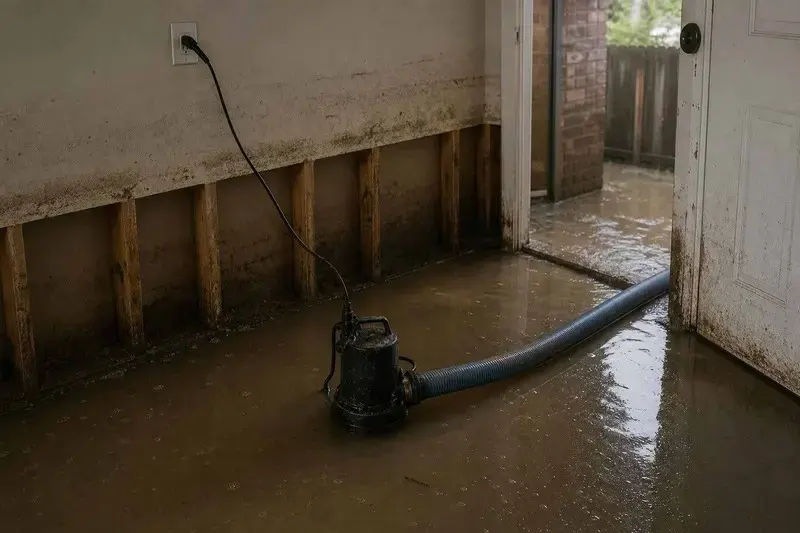
What to do the moment you find groundwater seepage
- 1Note where it enters
Seepage usually shows at the joint where the wall meets the floor, or through cracks in the slab.
- 2Check the sump
If the house has one, confirm the pump runs and the discharge line is clear.
- 3Move stored items
Cardboard boxes on a seeping slab wick water and grow odor quickly.
- 4Photograph the pattern
A wet band along one wall tells a different story than a wet center floor.
How the crew handles groundwater seepage
- AMap the wet slab
The tech who does the walkthrough reads the slab and wall base with pinless and pin meters.
- BExtract and squeegee
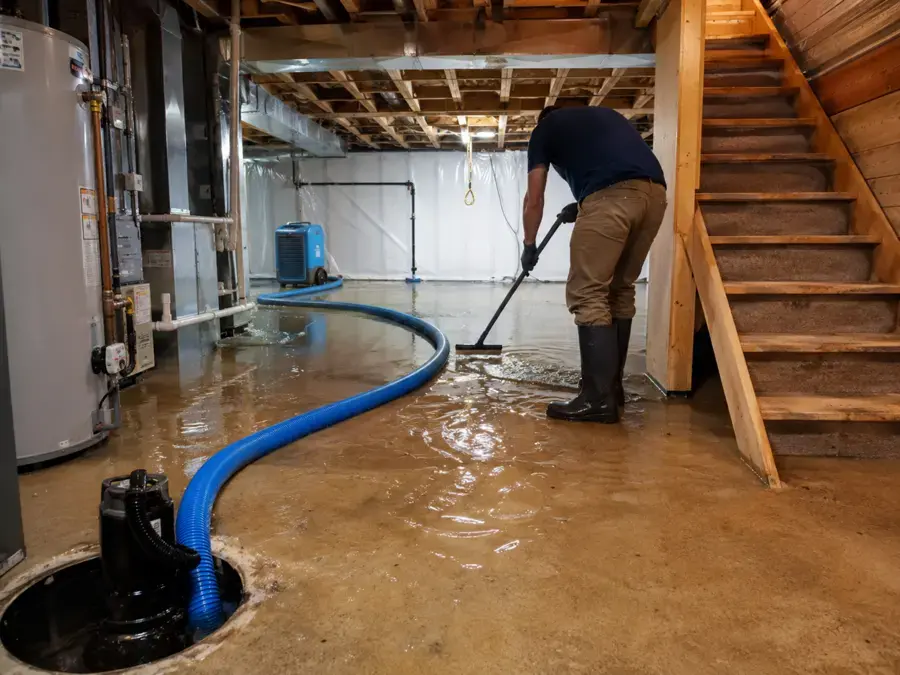
The extraction crew clears the floor and any carpet or pad holding water.
- CRemove wet finishes
Carpet, pad and the bottom of drywall on a seeping wall usually come out.
- DDry dense materials
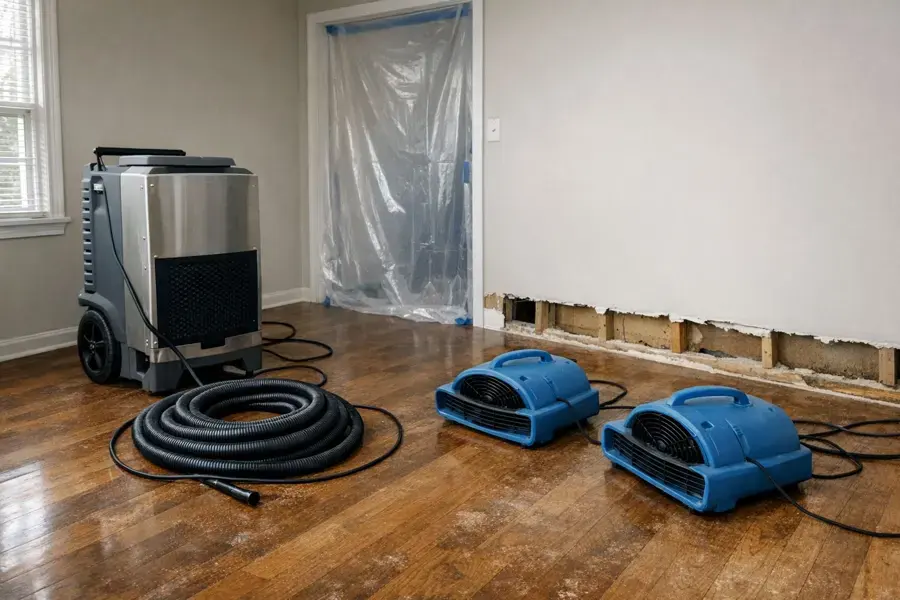
LGR dehumidifiers, and desiccants for Class 4 block and concrete, run to the goal.
Southeast Queens has a groundwater problem that most of New York City does not. For decades, wells run by the old Jamaica Water Supply system pumped large amounts of groundwater out of the aquifer under the area. After that pumping wound down in the 1990s, the water table rose, and basements from South Jamaica and Rochdale to St. Albans, Hollis and Springfield Gardens started taking on water that never used to reach them.
What does groundwater seepage cleanup cost in Jamaica, NY?
In Jamaica, NY, groundwater seepage cleanup typically runs $1,200 to $6,000, depending on how much of the slab is wet, whether finished walls and flooring are involved, the material class and how long the seepage has been going on.
Unfinished slab, one wall
$1,200 to $2,500
- Extraction and squeegee
- Concrete drying
- Readings until dry
Finished basement
$2,500 to $4,500
- Carpet and drywall removal
- Wall cavity drying
- Antimicrobial where needed
Chronic or Class 4
$4,500 to $6,000+
- Desiccant drying
- Long equipment run
- Detailed moisture log
Drivers: the water category, the square footage, the material class and how fast drying started. For a planning range, try the water damage cost calculator.
How groundwater seepage is handled in Jamaica
- 1
Moisture mapping
The tech who does the walkthrough maps wet materials with thermal imaging and pinless meters first.
- 2
Extraction
The extraction crew pulls standing water out with truck-mounted extraction, so it leaves the building.
- 3
Air movers and LGR
Air movers are set to each room's evaporation load; LGR dehumidifiers pull the moisture from the air.
- 4
Dry verification
Crews log readings daily and pull equipment once wet material is within 2 to 4 points of a dry reference.
How seepage differs from a basement flood
A flood arrives, fills the basement and stops. Seepage is hydrostatic pressure: the ground around and under the house is saturated, and water pushes through the easiest path, usually the joint between the floor and the wall, slab cracks and old pipe penetrations. It can be a thin film or an inch of water, and it tends to return after heavy rain and in wet seasons.
- Water shows first at the base of walls and at floor cracks
- Block walls darken in a band from the floor up
- Efflorescence, the white crust on masonry, marks where water has moved before
- Carpet and pad stay damp even when no water is visible
Drying a slab that sits in wet ground
Concrete and block are dense, Class 4 materials that give up water slowly. The drying team uses LGR dehumidifiers, and desiccants when the air is cold or the materials are very dense, and keeps the equipment running on readings rather than a calendar. Drying the basement does not stop the groundwater, so the moisture log also helps whoever designs the long-term fix, such as interior drainage and a sump.
If seepage turns into standing water after a storm, treat it as basement flooding. If water is also coming up the floor drain, it is a sewer backup and Category 3.
Where to report and learn more
The NYC Department of Environmental Protection manages Queens sewers and has studied the Southeast Queens groundwater issue. The EPA indoor air quality guidance explains why damp basements affect the air in the rest of the house.
Covering Jamaica and the neighborhoods around it
The Jamaica water damage pros take calls from Jamaica Center, Jamaica Estates, Jamaica Hills, South Jamaica, Rochdale Village, St. Albans, Addisleigh Park, Hollis, Briarwood, Kew Gardens, Richmond Hill, South Ozone Park and Springfield Gardens, plus the JFK Airport side of Southeast Queens.
The restoration team asks for the cross street and which floor is wet, because that decides what goes on the truck.
See every neighborhood and ZIP codeRelated water damage services in Jamaica
Groundwater seepage questions, Jamaica, NY
Why is my basement wet when it has not rained?
In parts of Southeast Queens the water table sits close to basement floors. Water can push through the slab and wall joints even on dry days, and it usually gets worse after a wet stretch.
Can seepage be dried if the water keeps coming?
The materials can be dried and wet finishes removed, but the seepage returns while the groundwater stays high. A drying log helps show what a permanent fix, such as interior drainage and a sump, needs to handle.
Is groundwater seepage covered by insurance?
Many homeowners policies exclude gradual seepage and groundwater. Sudden events, like a failed sump during a storm, are treated differently. Coverage depends on your policy, so it is worth checking with your own insurer.
Is seepage water clean?
Groundwater that seeps through a slab is often treated as Category 2 once it sits on a basement floor and picks up contamination. If it mixes with water from a floor drain, it becomes Category 3.
What materials should come out after seepage?
Carpet pad, cardboard, particleboard and the bottom of drywall on a seeping wall usually come out. Concrete, block and treated lumber are dried in place.
How long does a seeping basement take to dry?
Dense masonry dries slowly. A seeping basement often takes five to seven days of dehumidification after the water stops, sometimes longer in cold weather.
Water pushing through the basement floor? Call.
The drying team handles dense, Class 4 materials with LGR and desiccant dehumidification.